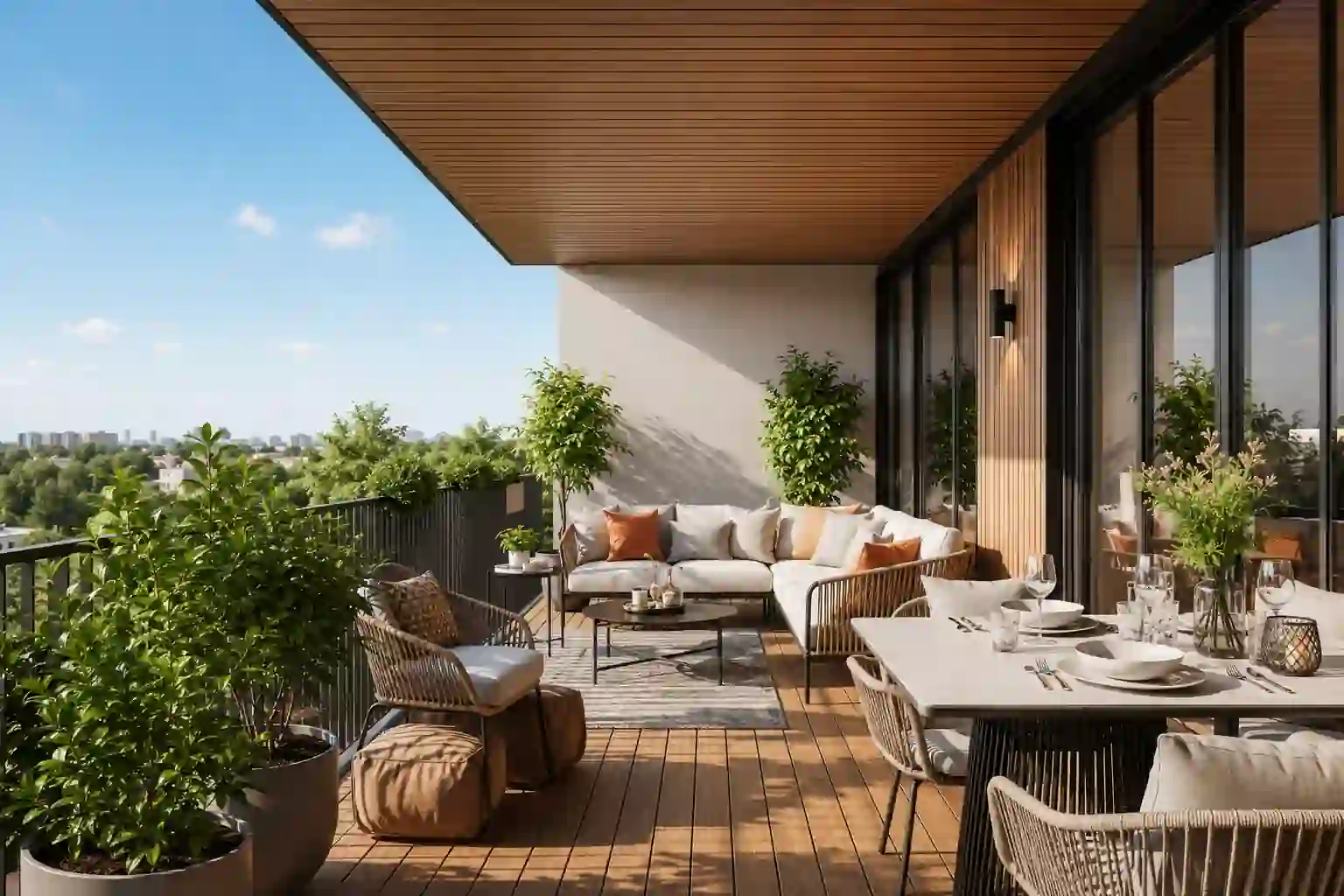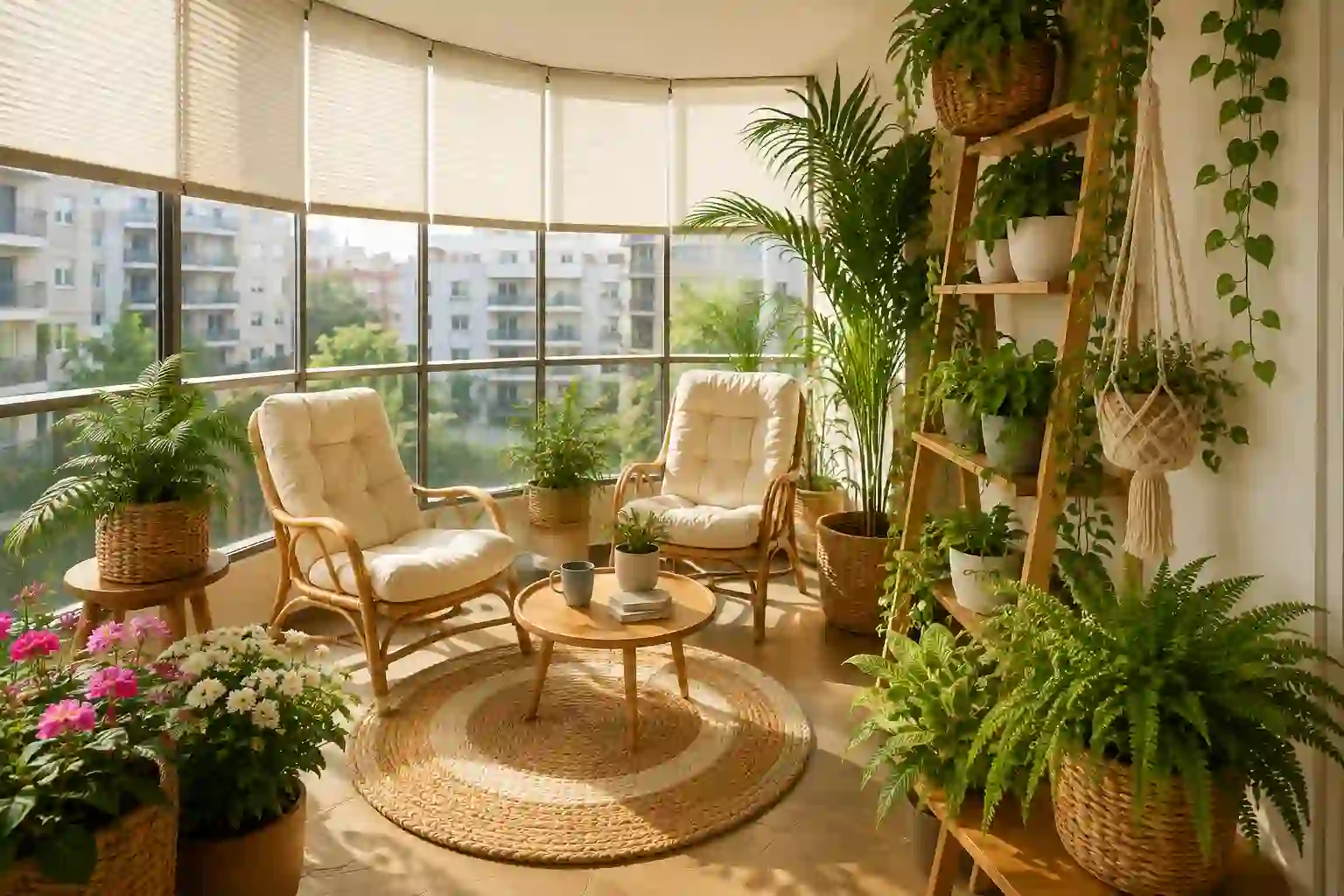
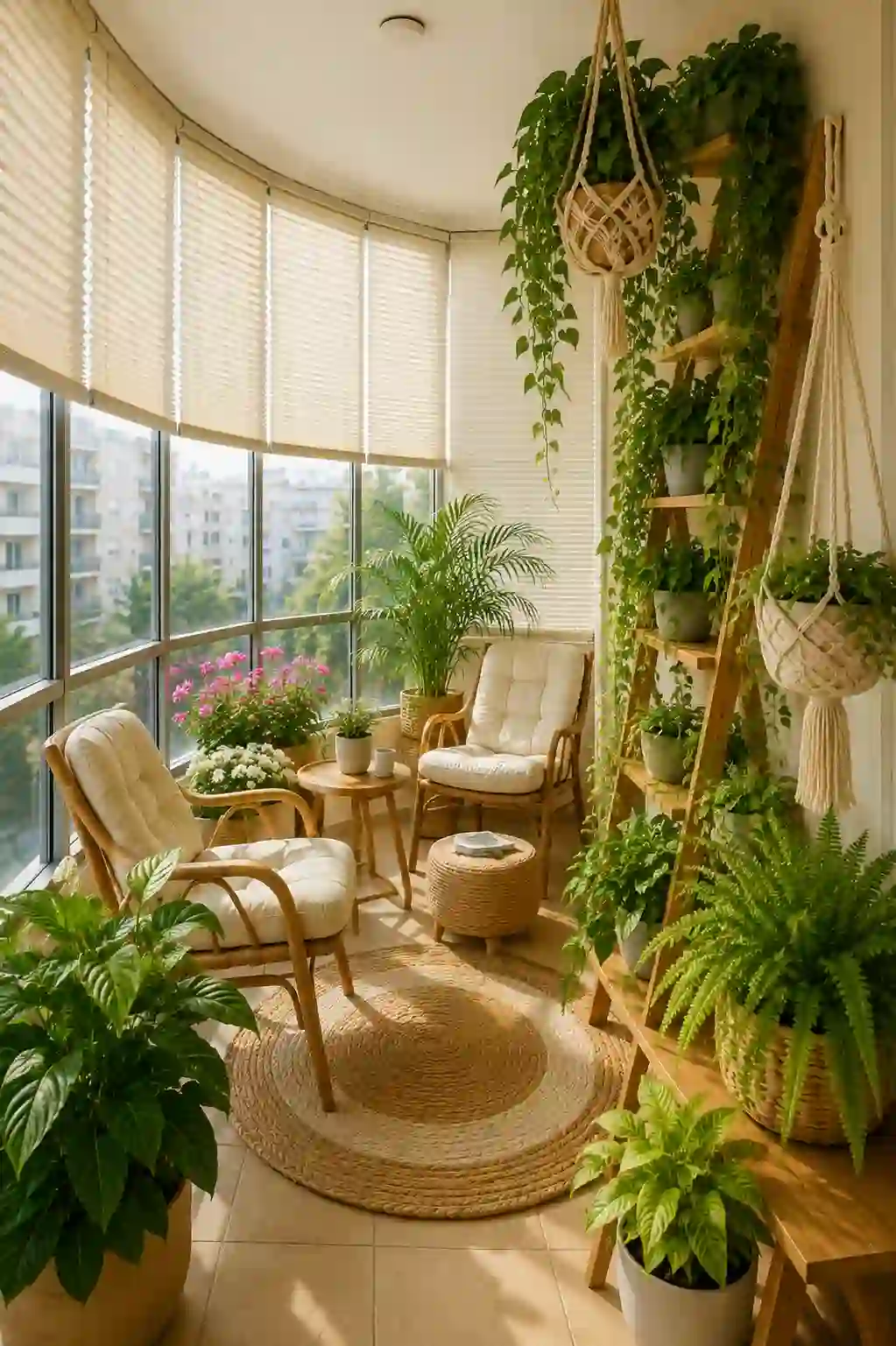



Most balconies start out with good intentions. A couple of chairs, maybe a plant or two, a plan to have morning chai out there every day. And then, slowly, it turns into the place where the drying rack lives, or the spot where the extra suitcase ends up.
This is a design problem, plain and simple. Good balcony interior design isn’t about adding more things; it’s about making sure the space actually works for how you live. This piece covers what to think through before you start, and seven practical upgrades that make a real difference.
In most cities, outdoor space is a luxury. A balcony, however small, is often the only direct connection a home has to fresh air and daylight that isn’t filtered through a window.
A well-designed balcony gives you:
It also extends how the whole home feels. Balcony interior design that’s actually usable stops being a leftover patch behind a grille and starts feeling like a genuine room, just one without a roof over the furniture.
Before buying furniture or plants, take stock of what you’re actually working with.
| Factor | What to check |
|---|---|
| Space | Usable floor area after railings, grilles, and drainage points |
| Sunlight | Harsh afternoon sun, gentle morning light, or mostly shaded |
| Rain exposure | Whether rain blows in during monsoon, and how water pools |
| Safety | Railing height, grille gaps, furniture stability near the edge |
| Privacy | How close and visible neighbouring buildings or windows are |
| Intended use | Quiet solo time, hosting guests, or practical storage and drying |
Once these are clear, the actual design decisions get much easier.
Bulky furniture rarely works on a balcony. Compact, foldable, and multifunctional furniture make far better use of limited space.
The goal isn’t to fill the space. It’s to make sure every piece earns its place.
Plants transform a balcony, but only when matched to actual conditions rather than picked on looks alone.
| Balcony condition | Plants that tend to work |
|---|---|
| Strong direct sun | Bougainvillea, aloe vera, sun-tolerant money plant |
| Limited or filtered light | Ferns, peace lily, snake plant |
| Low time for upkeep | Succulents, drip irrigation setups |
| Narrow floor space | Vertical planters, tiered plant stands |
Be realistic about maintenance. Low-upkeep plants keep your balcony interior design green without becoming another chore.
Balcony interior design without a proper seating corner rarely gets used, no matter how nicely it’s decorated. Even one comfortable chair with a soft cushion changes how often you step outside.
A few things that help:
This one change, more than almost any other, usually decides whether a balcony becomes part of your daily routine.
On a small footprint, colour needs a lighter touch than it would indoors. Too many competing colours can make a compact space feel cluttered.
Balcony lighting is one of the most underrated upgrades, and often the cheapest to fix. It extends how usable the space is after sunset.
Flooring is often ignored, but it defines how a balcony feels underfoot and visually.
| Flooring option | Best for |
|---|---|
| Outdoor-rated tiles | Durability against sun and rain |
| Composite decking | A warm, natural look with low upkeep |
| Weather-resistant outdoor rug | Refreshing an already decent tiled floor |
Whatever you pick, make sure it handles water well. A floor that turns slippery or stains after the first heavy rain creates a new problem rather than solving one.
Styling is the final layer, and restraint matters most here. The instinct is to add more, more cushions, more decor. Resist it.
A balcony styled with five thoughtful pieces almost always looks better than one crowded with fifteen.
| Mistake | Why it’s a problem |
|---|---|
| Overcrowding | Leaves no breathing room, makes the space feel smaller |
| Unsuitable furniture | Indoor pieces warp or fade when exposed to sun and rain |
| Blocked drainage | Causes water pooling and damp issues during heavy rain |
| Excessive decoration | Undermines the calm, open feeling most people actually want |
Slowing down before adding anything new and asking whether it genuinely improves the space avoids most of these.
DIY balcony makeovers often run into the same issue: it’s easy to buy furniture, plants, and lights separately, but hard to make them work together as one cohesive space, especially on a constrained footprint.
Bonito Designs approaches balcony interior design the way it approaches the rest of the home, by understanding how the space will actually be used first. That means factoring in sunlight and rain exposure when choosing materials, planning layouts that leave room to move, and keeping colours and finishes visually connected to the rest of the home.
The result is a balcony that holds up through daily use and changing seasons, not just one that photographs well once. Book a consultation with Bonito Designs today to create a balcony that you genuinely feel like using every day!